
Day Counter
Count the exact days until any upcoming event or since any past date
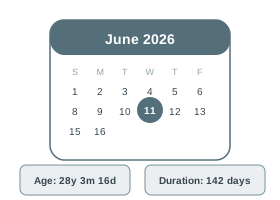
Real-Life Guide to Using the Day Counter
Days until or since a date. Use the examples and checks below to turn the number into a practical decision.
When this calculator is useful
For counting down to a single upcoming date — a wedding, an exam, Diwali, a visa expiry, or a flight departure — or counting up from a past date like a relationship anniversary or the day a business was founded.
For most people, the best way to use the Day Counter is to try the real case first, then change one input at a time. That makes the trade-off visible. For example, with a loan calculator you can change tenure while keeping the same rate; with an investment calculator you can change return assumption while keeping the same monthly contribution; with a health, education or measurement calculator you can check how much one input changes the final category.
The result should answer a practical question: Can I afford this? How much should I save? Is this score enough? Is this measurement within range? What is the safer or cheaper option? If the output does not answer the decision clearly, adjust the inputs until the scenario matches your real situation.
Practical Advice
Use the Day Counter as a planning tool, not just a number generator. Write down the inputs you used, because the final answer is meaningful only when you remember the assumptions behind it.
If the decision affects money, health, tax, safety, academics or legal compliance, keep a second check ready. That second check may be a bank quote, payslip, official rule, prescription, site measurement, mark sheet or invoice.
Common Mistakes
- Forgetting that "days until" typically excludes today itself, so counting to a date 10 days away by hand often gives 9 or 11 depending on whether today is included.
- Not noticing when a chosen festival date is tentative — Diwali, Eid, and other lunar-calendar festivals shift each year, so using last year's date instead of confirming the current year's official date.
- Assuming a visa or passport "valid until" date means the last day you can be in the country, when many countries require exit before that date, not on it.
- Ignoring time zones for countdowns to global events (like an international exam registration deadline in a different country's midnight), leading to a day's miscount.
- Counting "days since" a birth or event by only subtracting years, ignoring the leftover months and days, which understates how long it has actually been.
How to Interpret Results
A positive count means the date is in the future (days remaining) and a negative or "days ago" label means it has already passed — use the exact figure to plan backwards, such as when a 30-day visa reminder needs action.
A good interpretation looks at both the main result and the supporting values. If a page shows totals, ratios, categories, schedules or warnings, read those together instead of focusing only on the biggest number.
Day Counter FAQs
Useful answers for interpreting the output, avoiding mistakes and using the result responsibly.
About the Day Counter
This tool counts the exact number of days between today and any target date — upcoming (countdown) or past (days since). It's useful for exam countdowns, project deadlines, anniversaries, contract end dates, and any event you want to track.
For more detailed date calculations — including working days, hours, and years/months/days breakdown — use our Date Calculator.